
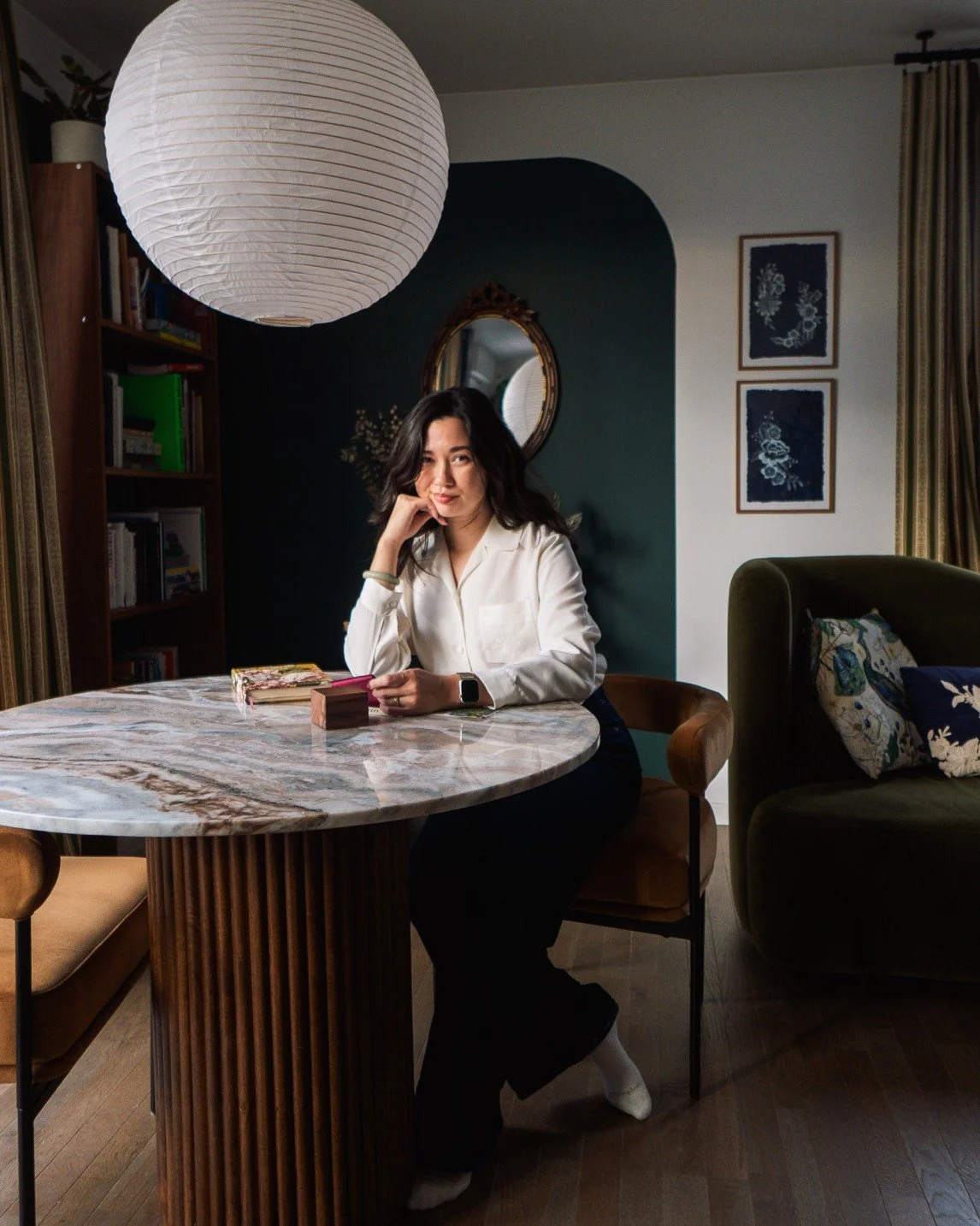
Translating you — all of you — into interiors.
I'm Shana, a Paris-based interior designer, originally from the U.S. I have lived between cultures my entire life — Vietnamese mother, Jewish American father, French Vietnamese husband — and now I help people feel at home in theirs.
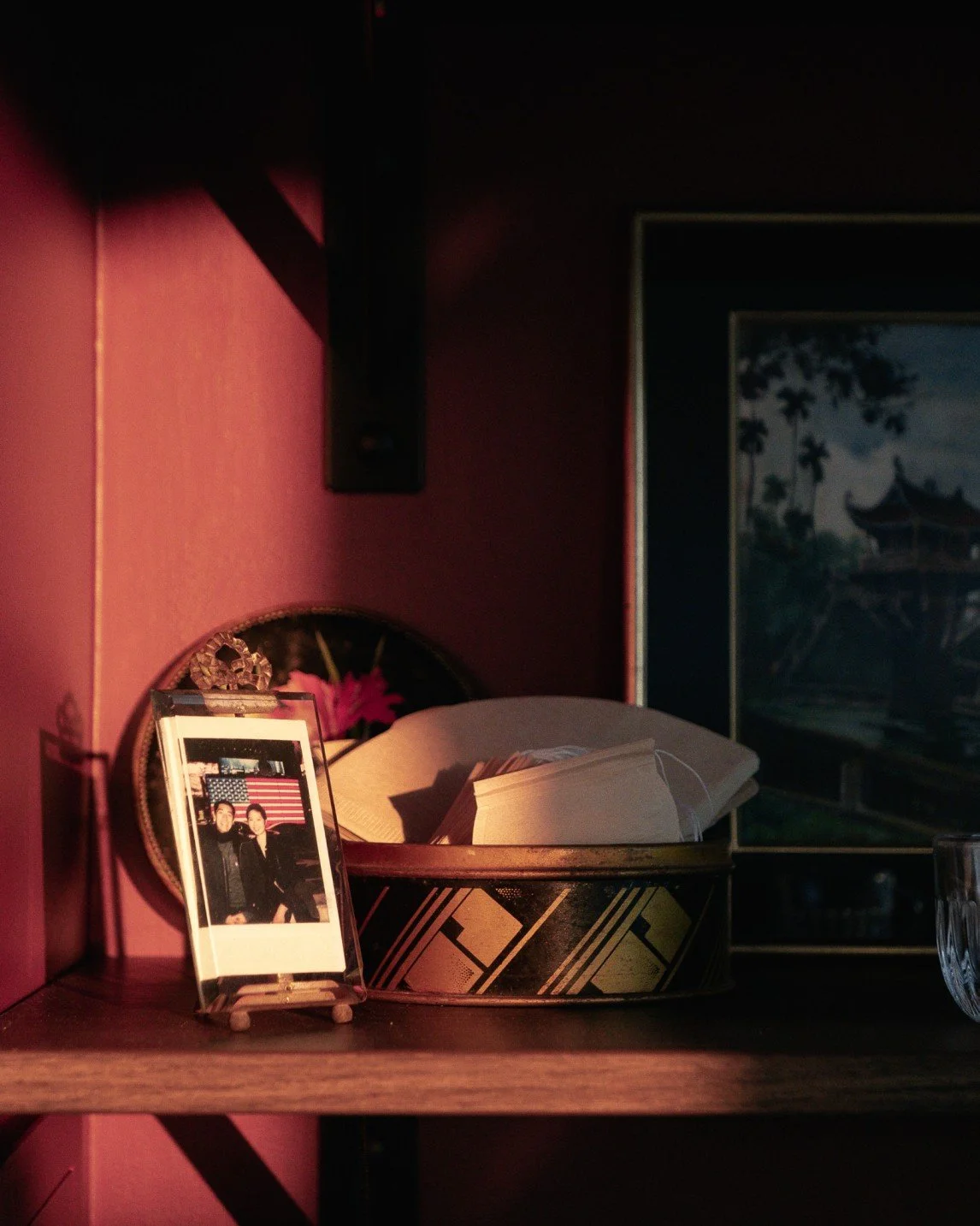
My whole life, people have asked me two questions:
“Where are you from?”and “What are you?”
Growing up, I absorbed the language other people used to describe me. Half American. Half Vietnamese. Half Asian. Half Jewish. Labels that described me as a percentage, as if identity and belonging were not seen as whole.
It wasn't until I arrived in Paris and began speaking French that I finally had the words to place my own belonging.
J'ai grandi aux États-Unis.
Ma mère est vietnamienne. Mon père est américain.
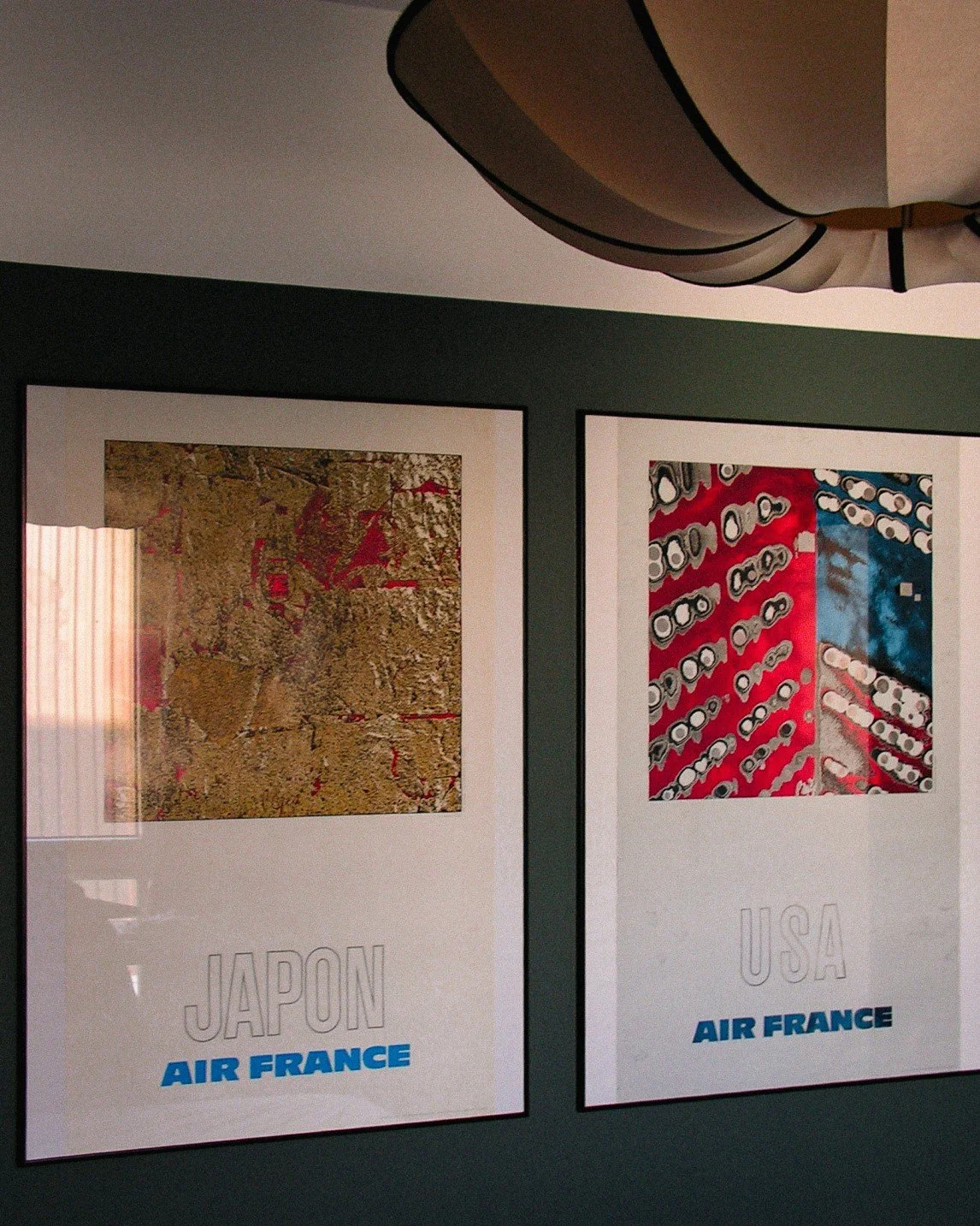
When I translated it back to English,
I grew up in the United States.
My mother is Vietnamese. My father is American.
I finally had the words I could never find before. Not halves. Not pieces of. Whole sentences. A whole me. Each sentence is complete and each sentence is true.
Language shapes how we understand ourselves. So does space.
A room can embrace who you are, or unintentionally erase you. The objects you choose, the colors you design around, the way you display what you love — all of it is a form of cultural expression, whether you name it that or not.
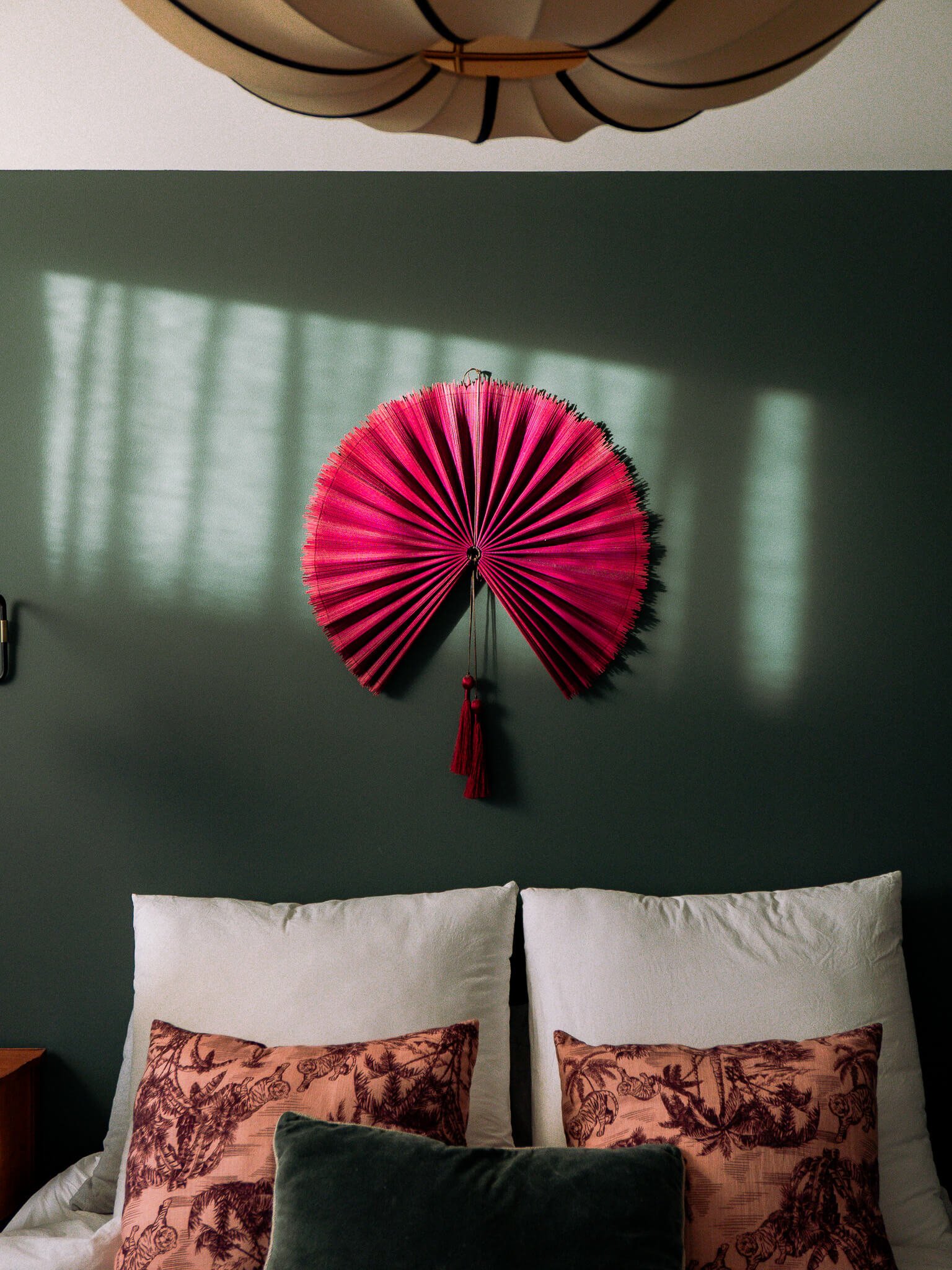
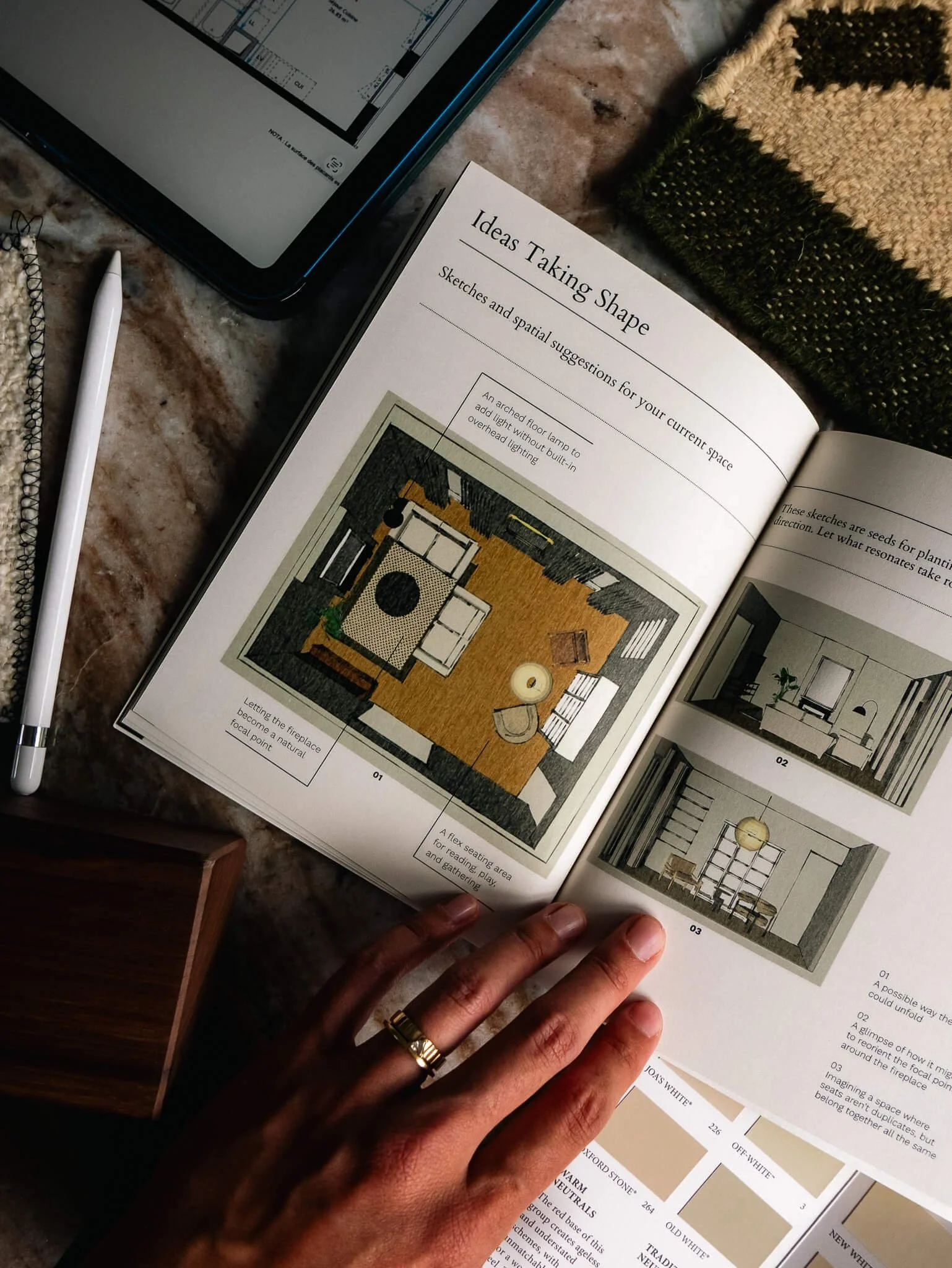
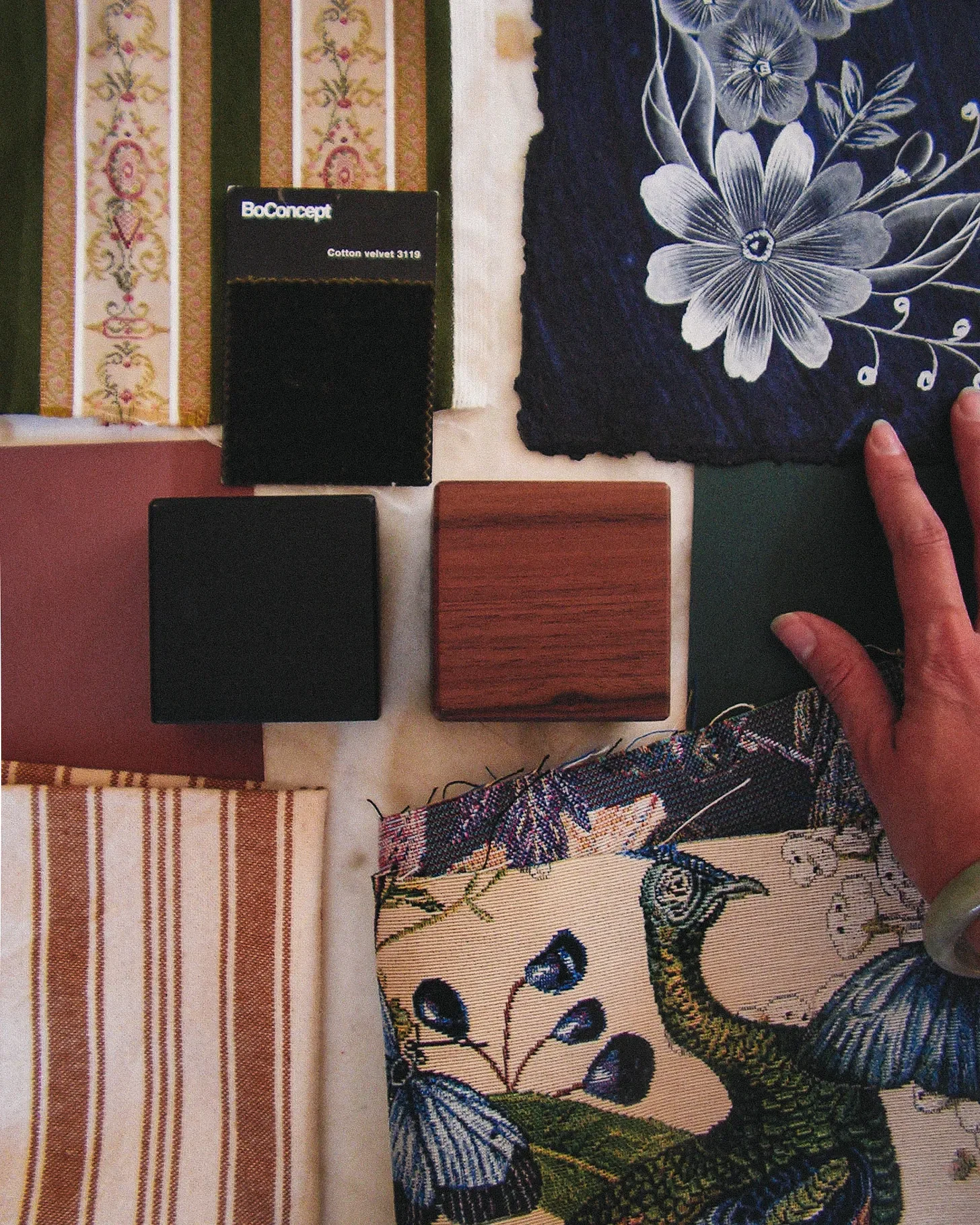

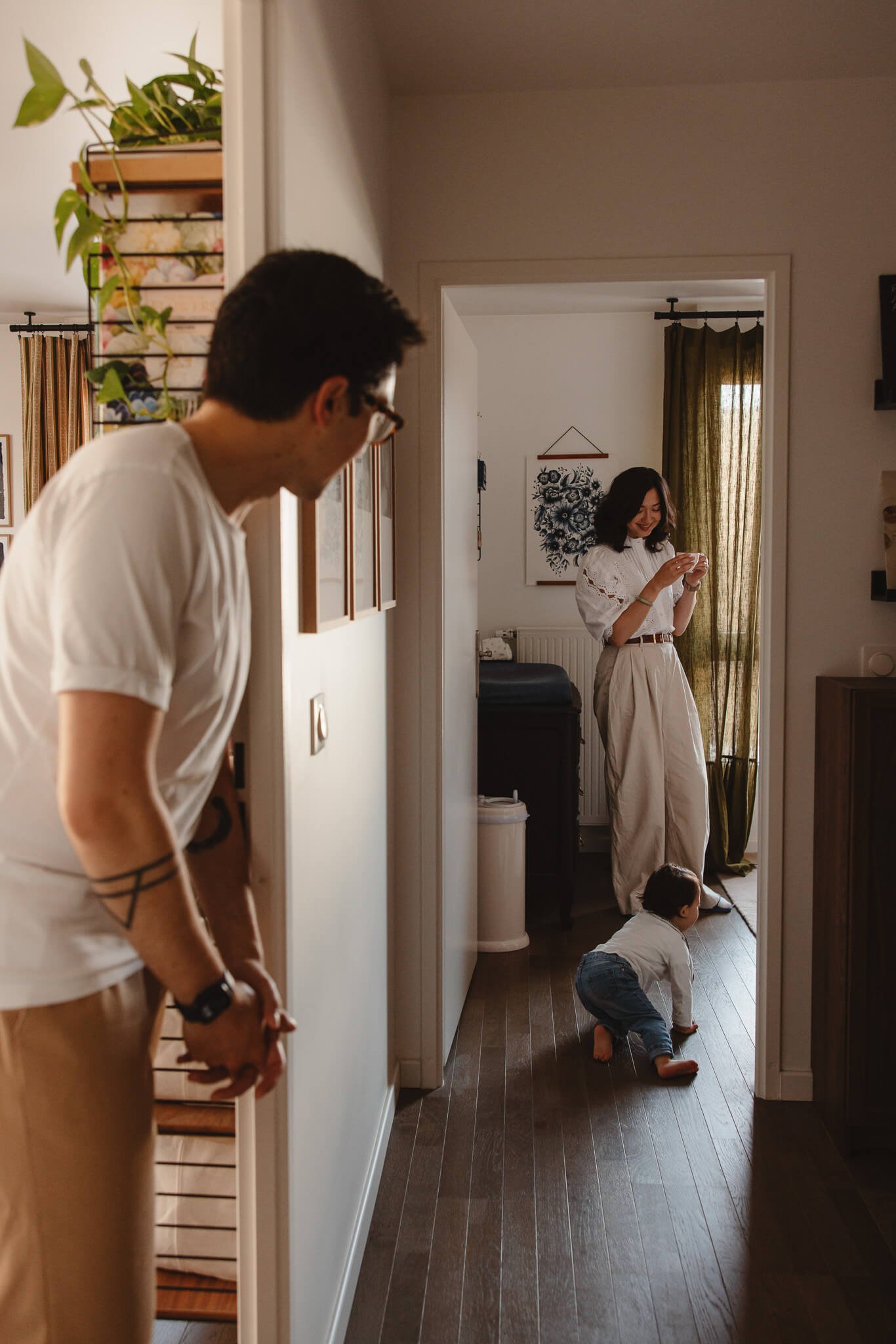
I am the daughter of a Vietnamese mother and a Jewish American father, raised in the U.S. I was also a competitive ice skater at the national level for most of my life.
None of this is how most Parisian interior designers begin.
None of my life is linear. All of it is mine.
Before interiors, I studied structural civil engineering. By my mid-twenties I was managing $25 million budgets, leading global design projects, consulting in innovation labs, and travelling the world working for U.S. embassies.
On a vacation in London, during a time when I was mostly living out of a suitcase for work, I met a mixed Frenchman. He felt like home the moment we met — which is a strange thing to say, given that I had spent my entire life moving between cultures and countries and versions of myself, never quite feeling a true sense of belonging.
Our second date was a few weeks later in Amsterdam. Our third, a 10-day stay in South Korea three months after we met, was when we said out loud what we'd both been feeling since London.
We got married. We moved to Paris. Even without me speaking French. I left the salary. The titles. The path I felt expected of me. I stepped off the ledge of comfort into the unknown.
Paris was a new language. For the first time in my life, when no one knew me and I couldn't communicate, I stopped performing a version of myself for anyone. Including myself.
Six months after arriving in Paris, I applied to a Master's program in Interior Decoration at LISAA School of Design in Paris. In French.
The admissions interview was an hour and a half — conducted entirely in French, with the school's director — at this point I was still debating whether to say une or uncroissant at the boulangerie, often ending up taking home two because deux croissants was inevitably simpler than knowing if a word was feminine or masculine.
Following an hour and a half of me talking in this new language and presenting my interior viewpoint, the directrice looked at me, said something in French I couldn't quite piece together, and turned to her computer. I still remember the sound of her fingers on the keyboard. Then she printed something out and handed it to me across the desk. An acceptance letter.
I graduated. I built my practice here. I made a life that looks like nothing I've seen elsewhere, yet feels entirely like myself.
I have my Vietnamese mother's eye for detail and my Jewish American father's instinct for story. I have a structural engineer's understanding of space and a designer's feeling for what a room does to a person when they walk in.
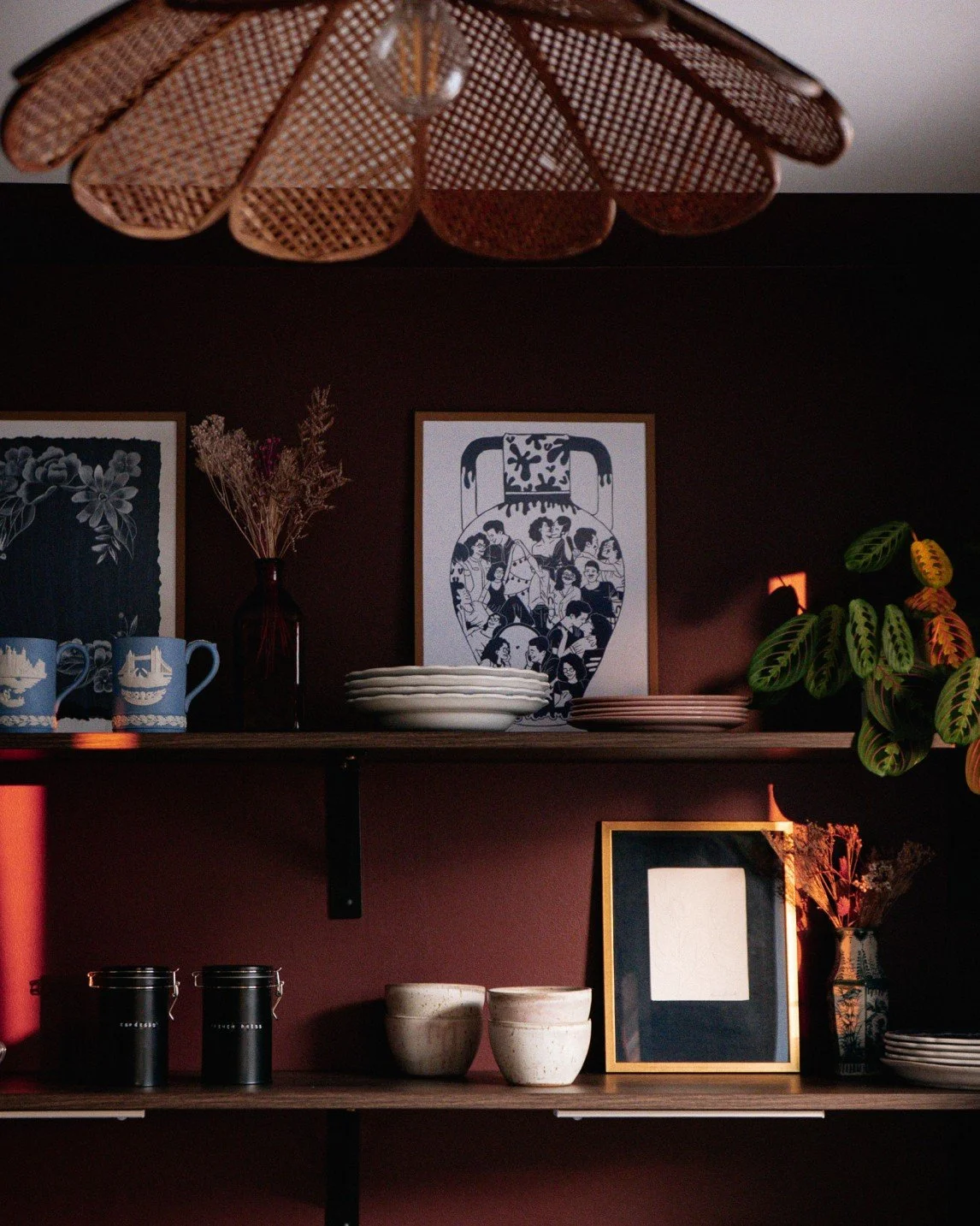
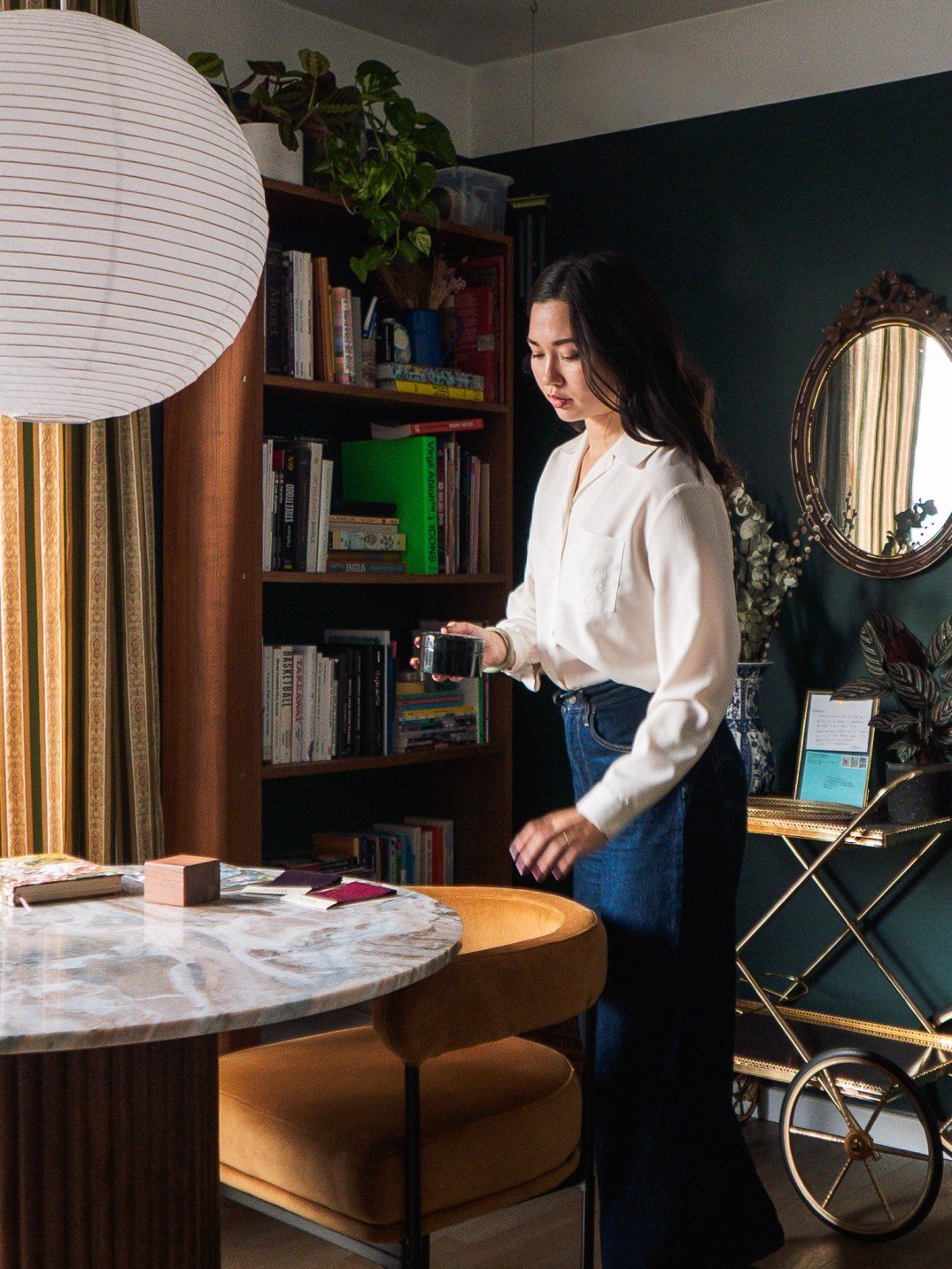
I see what others cannot articulate. I name what most cannot place. I see in the in-between.
I design for all of you — every culture, every country, every version of yourself.
Subscribe to my Substack — writing on interiors, belonging, and the spaces between cultures.
